Is Dog Sledding in Tromsø Ethical?
Is dog sledding in Tromsø ethical? What Norwegian law requires for sled dogs kept outdoors, what science says, and what to check at a kennel before you book (Oct 2026).
Dog sledding in Tromsø can be ethical: Alaskan huskies are bred to run in teams and to live outdoors in the cold, and Norwegian law sets minimum standards for how they are kept. But the law sets a floor, not a guarantee, and conditions differ from kennel to kennel. The fair way to decide is to book a tour that shows you the dog yard, look at the dogs, and ask how they are rested and retired. Tromsø Villmarkssenter’s guided ride includes a walk round its dog yard with a handler who explains how the dogs are bred, trained and cared for; it is from $366 a person, rated 4.9 from 750 reviews (checked October 2026).
What Norwegian law requires
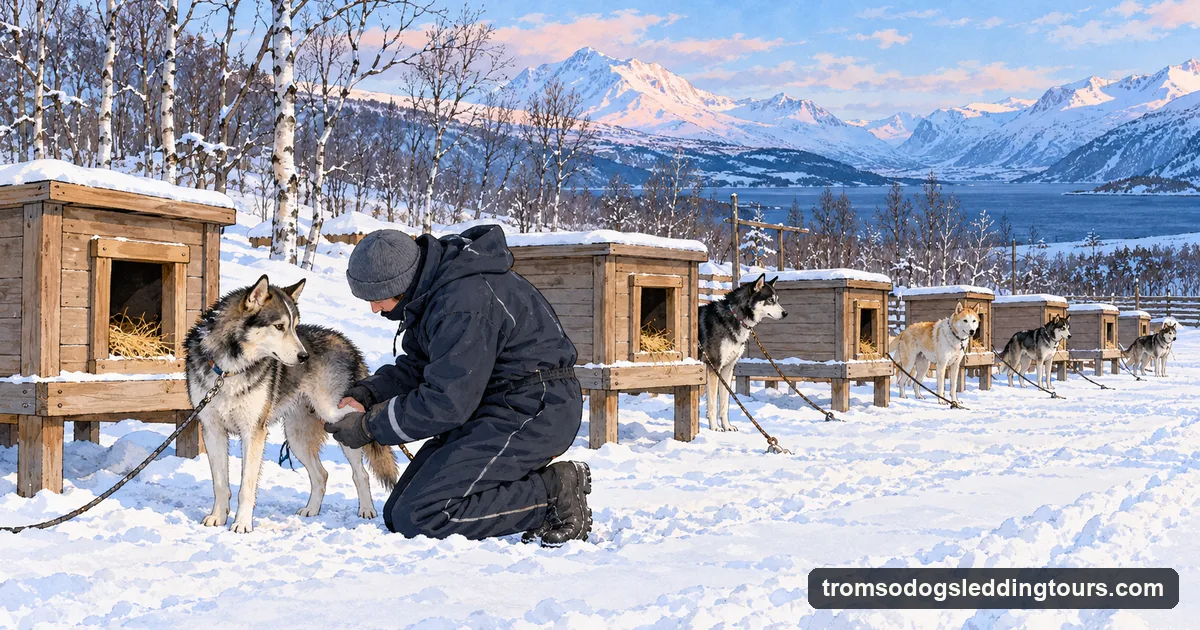
In Norway sled dogs fall under the Animal Welfare Act, which makes the keeper responsible for the animals’ environment, care, feed, water and health. The Norwegian Food Safety Authority, Mattilsynet, enforces it and publishes guidance on how dogs kept outdoors should be housed to meet the Act. Sled dogs are named there as a group usually kept outside, often tethered or loose in pens, each with its own small house. Among the points in that guidance:
- Only suitable dogs outdoors in winter: polar breeds or dogs with a full winter coat, acclimatised step by step. Bitches with puppies and puppies under six months should not be kept out.
- A house for every dog: waterproof and windproof, insulated as the climate requires, raised off the ground, big enough to stand, turn and lie down in, with dry bedding changed when wet. A sick or injured dog needs a heated room.
- Tethering: at least 12 square metres to move in and a tether long enough for a full circle, so at least 2 metres of chain. No choke or chain collars.
- Exercise and loose time: tethered dogs should be let off several times a week, at least 10 hours a week in all, and every dog should be able to run or train several times a week, ideally daily, all year.
So a Tromsø kennel with rows of dog houses and dogs on chains is not, by itself, a sign of neglect: that is how Norwegian sled dogs are usually kept, and the rules above say what it must look like.
What the research says
In 2017 Norway’s Scientific Committee for Food and Environment (VKM), asked by Mattilsynet, assessed the welfare of dogs kept permanently outdoors and dogs in sled dog races. Its conclusion was careful: outdoor housing and racing can be stressful for dogs, but the scientific data is scarce and no specific level of risk could be assigned. The clearest hazard it named was in racing rather than tourism: too little recovery time between runs, which can cause fatigue and even deaths. Tourist runs are short by comparison, 30 to 80 minutes on the tours here, but the question of rest still applies to a kennel that runs several tours a day.
What you can check yourself
At the kennel, look and ask:
- Do the dogs look lean but not thin, alert, with clean coats and dry houses?
- How many runs does a dog do in a day, and how many rest days in a week?
- What happens to dogs that are old, injured or do not like running? Some kennels keep them, some rehome them; a good kennel answers without hesitation.
- What happens in summer, when there is no sledding?
- Is there a vet the kennel uses, and how are paws checked in cold, icy snow?
The weight limits on the self-drive tours, 170 kg a sled on Arctic Adventure Tours and 118 kg a person at Tromsø Villmarkssenter, are there for the dogs as much as for you, and so is the guide’s insistence that you brake and keep your distance. Accept both.
Check dates for the guided ride with the dog yard →
What the kennels say about themselves
We have not inspected any kennel, and we cannot vouch for one. What follows is what each says on its own site or listing. Tromsø Villmarkssenter says the dogs are at the centre of everything it does, and its founder, Tove Sørensen, has finished Finnmarksløpet 19 times. Arctic Adventure Tours, run by Per-Thore and Hege since 1999, lists animal welfare among its principles. OffTrack Experience, a family kennel of around 35 huskies in Målselv, says the route, pace and team on its private tours are adapted to how each dog is feeling.
Guided Ride with Lunch
A handler explains breeding, training and care in the dog yard; a musher drives the sled for about 45 minutes.
Check dates →Private Sledding, Målselv
About 35 huskies, your own guide, time to meet the dogs and help unharness them. Two hours from Tromsø; no transport.
See the private tour →Evening Husky Visit
Meet the dogs and puppies by a campfire, with dinner and a chance of the aurora; nobody pulls a sled.
See the visit →Prices and ratings from GetYourGuide (checked October 2026); operators change prices, so treat them as a guide, not a quote.
If what you see at a kennel worries you, you can report it to Mattilsynet, which handles animal welfare complaints in Norway. For a visit without any sledding, see husky farm visits; for the difference between driving and riding, self-drive or passenger.
Housing, tethering and exercise points from Mattilsynet’s guidance on keeping dogs outdoors (under the Animal Welfare Act, sections 6, 23 and 24); the research summary from VKM Report 2017:8; kennel statements from Tromsø Villmarkssenter’s and Arctic Adventure Tours’ own websites and OffTrack Experience’s listing; tour details and prices from the GetYourGuide listings, read on 29 October 2026.
A Ride Where You See the Dog Yard
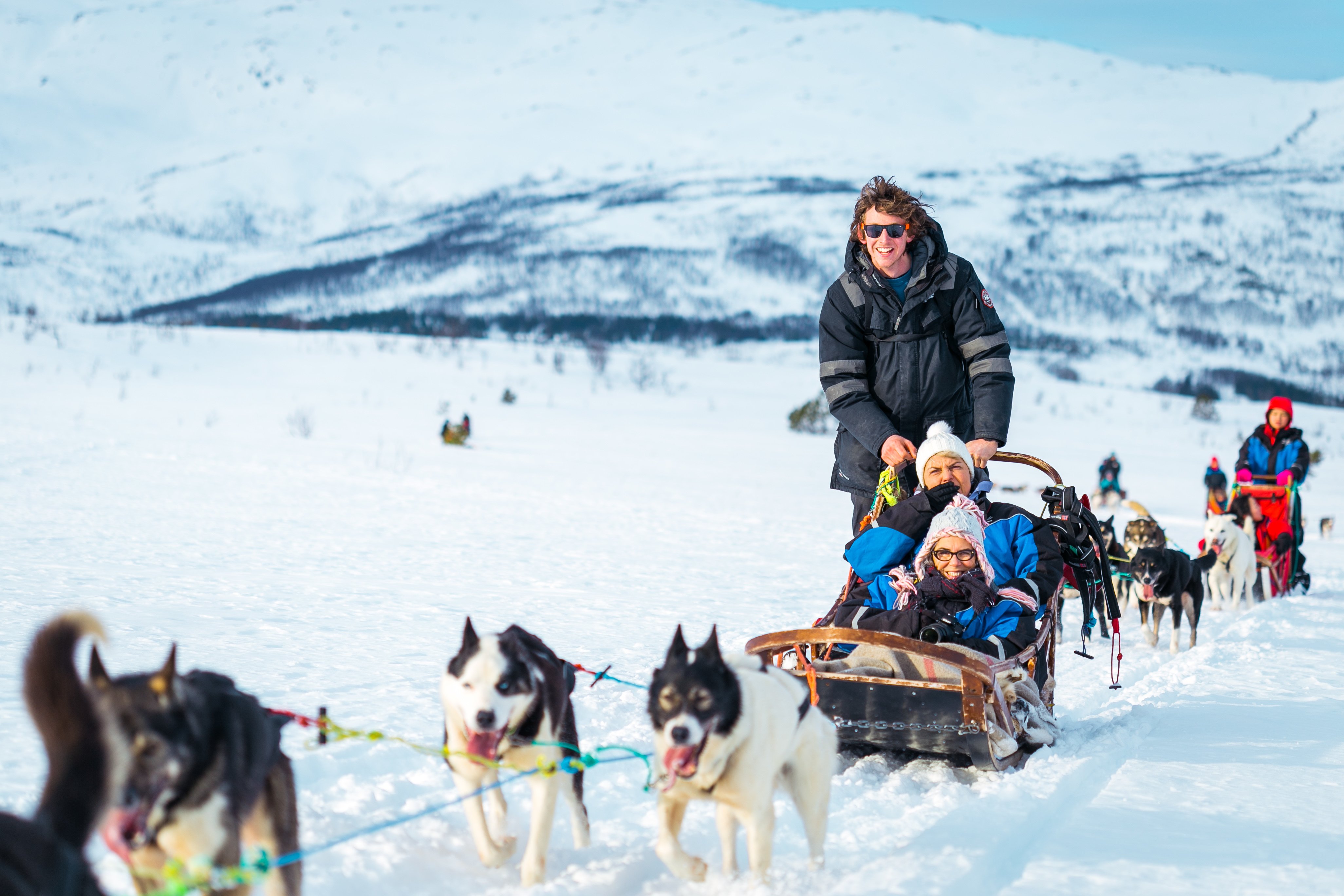
Tromsø Villmarkssenter's guided husky sledding: about 45 minutes in a sled a musher drives, then a handler takes you round the dog yard, explains how the dogs are bred, trained and cared for, and introduces the puppies; lunch by the fire. On GetYourGuide in October 2026, free cancellation up to 24 hours before.
Check Dates